How to Find Your Unique Artistic Style and Voice as a Visual Creator
Most artists and graphic designers spend years waiting for their style to "arrive" — as if one morning they'll wake up and everything will click into place. That's not how it works. Artistic style is built, piece by piece, through decisions you make repeatedly over time. This guide walks you through exactly how to do that.
What Is Artistic Style (and Why It Matters for Your Portfolio)
Artistic style is the recognizable visual language that runs through your work — the choices in color, composition, line quality, and subject matter that make a piece unmistakably yours. Your creative voice is the underlying perspective that drives those choices: what you find worth saying and how you say it visually.
For a portfolio, this matters more than most creators realize. When a potential client or gallery curator scrolls through your work, they're not just evaluating individual pieces — they're looking for evidence that you can deliver a consistent, intentional result. A cohesive visual identity signals professionalism and makes your work memorable. Without it, even technically strong portfolios can feel scattered and forgettable.
Graphic designers sometimes assume that style is a fine-art concern, not relevant to client work. The opposite is true. Designers with a distinct aesthetic sensibility attract clients who specifically want that sensibility — which means less friction, better fit, and stronger long-term working relationships.
Start by Studying Your Influences Without Copying Them
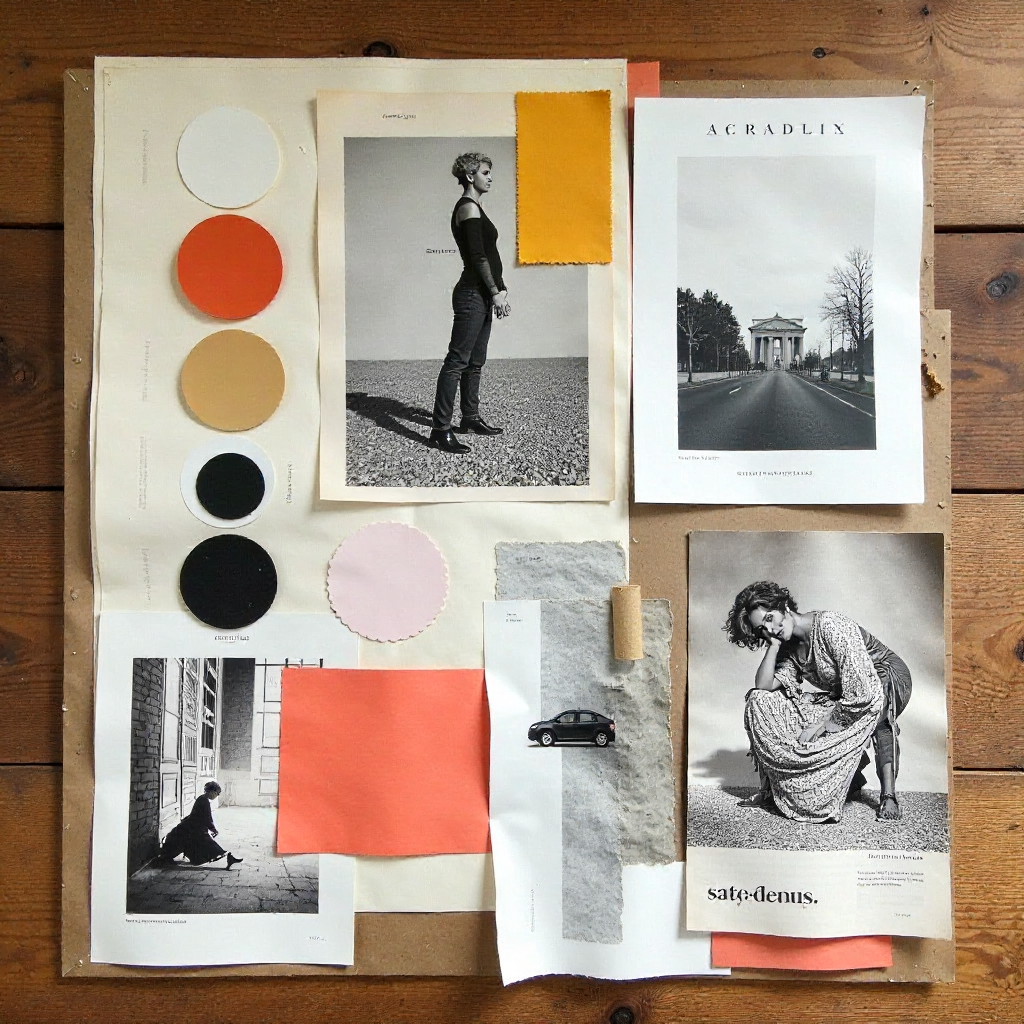
The fastest way to understand your own taste is to audit what already moves you. Collect 20 to 30 images, artworks, or design pieces that you genuinely love — not what you think you should love — and lay them out on a physical or digital mood board.
Then ask: what do these have in common? Look for recurring patterns in palette, texture, negative space, subject matter, or emotional tone. You'll usually find three or four threads that keep appearing. Those threads are data about your aesthetic instincts.
The key distinction is using influences as a springboard, not a template. Study how Saul Bass used flat geometry to create tension, or how Egon Schiele's contour lines carry emotional weight — then ask yourself what you would do with those principles. Imitation is how every creator learns. The problem is stopping there.
One practical exercise: pick a single influence and try to recreate the feeling of their work using entirely different subject matter, color, or medium. You'll quickly discover which elements were theirs and which instinctively became yours.
Experiment Deliberately Across Mediums and Techniques
Structured experimentation — not random exploration — is what surfaces your natural tendencies. The goal isn't to try everything; it's to try enough that you can make informed comparisons.
Set yourself a constraint: spend two weeks working exclusively with a limited palette of three colors. Then spend two weeks working only in black and white. Try digital illustration after months of working analog, or vice versa. Each constraint forces you to solve problems differently, and your solutions reveal preferences you didn't know you had.
Pay attention to what feels effortless versus what feels like a fight. Some mediums will make you lose track of time. Others will feel like homework regardless of how long you practice. That friction is useful information — not necessarily a reason to quit, but worth noting.
A few specific experiments worth running:
- Recreate the same composition in three different color palettes and see which one you'd hang on your wall
- Work at a scale you've never tried — very large or very small — and observe how your mark-making changes
- Combine two aesthetics you love that seem incompatible, and see what emerges
The niche aesthetic you're looking for often lives at the intersection of unexpected combinations.
Look for Patterns in Your Own Work
Reviewing your past work critically is one of the most underused tools in style development. Gather everything you've made in the last year — finished pieces, abandoned sketches, client work, personal projects — and look at it all at once.
What keeps showing up? Maybe you consistently gravitate toward muted, earthy tones even when the brief doesn't require them. Maybe your compositions almost always have a strong diagonal tension. Maybe you're drawn to depicting solitude or stillness. These aren't accidents — they're the seeds of your emerging style.
Be specific in your analysis. Instead of noting "I like dark colors," identify whether it's desaturated blues, warm shadows, or high-contrast near-black backgrounds. The more precisely you can name your tendencies, the more intentionally you can develop them.
This review process also helps you identify what isn't working. Work that felt forced, that you made to fit a trend or please someone else, usually looks different from the rest. That contrast is clarifying.
Refine Through Repetition and Iteration
Style solidifies through consistent practice and intentional iteration — not through a single breakthrough moment. Most working artists and designers point to a period of sustained, focused output as the time when their style finally felt coherent, not to one specific piece or revelation.
The iteration process looks like this: make something, identify one element you want to push further, make the next thing with that intention, repeat. It's slow and sometimes tedious. But it's how you move from "I kind of have a style" to "my work is unmistakably mine."
A realistic benchmark: expect this process to take one to three years of regular output before your style feels truly settled. That's not a discouraging timeline — it's a freeing one. It means you don't have to figure everything out this month.
One trap to avoid: iterating in isolation. Share work in progress with peers or in online communities where you'll get honest feedback. Sometimes an outside eye spots your stylistic fingerprints before you can see them yourself.
Translate Your Style Into a Cohesive Portfolio Presence
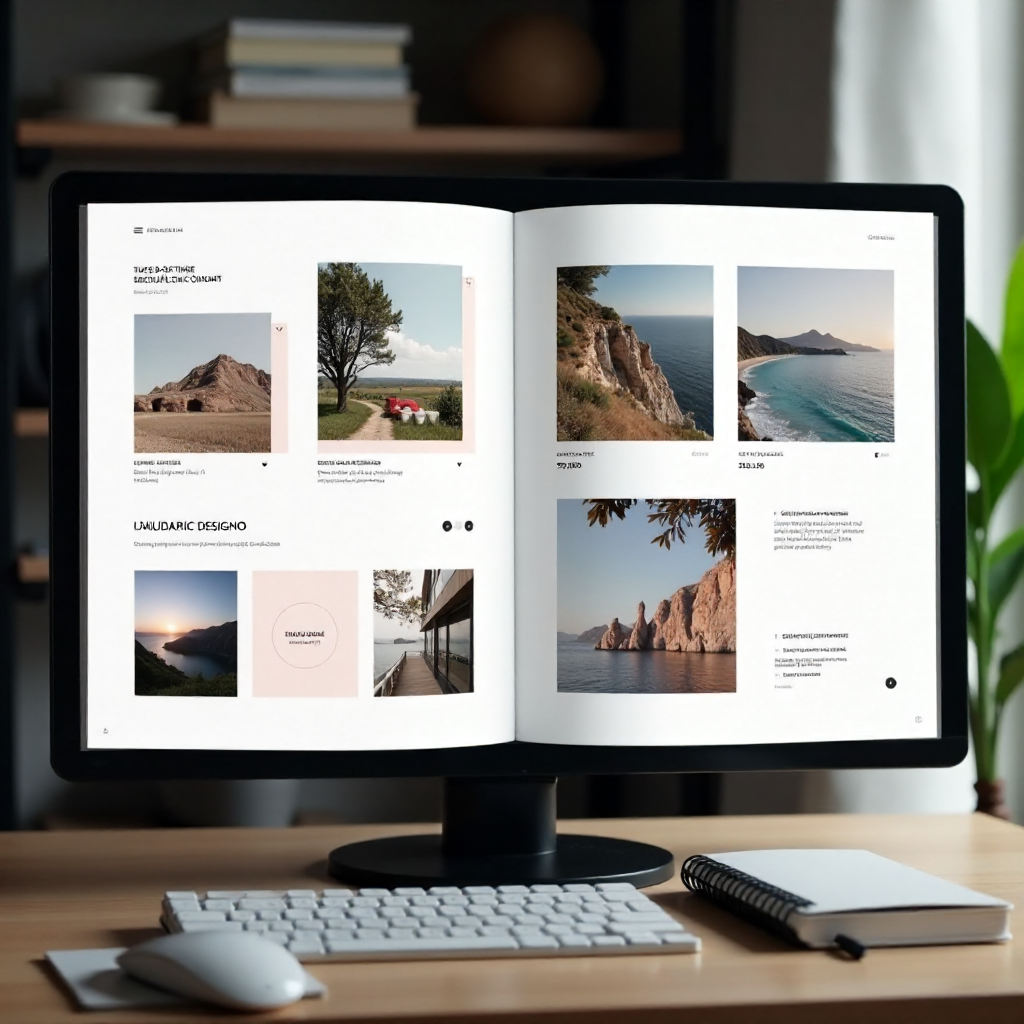
Once you have a clearer sense of your creative voice, the work is applying it consistently across everything you show publicly. Portfolio cohesion doesn't mean every piece looks identical — it means there's a recognizable thread connecting them.
Start by curating ruthlessly. Remove work that doesn't reflect where you're going, even if it's technically impressive. A portfolio of twelve cohesive pieces is significantly stronger than twenty pieces that pull in different directions.
For graphic designers balancing client work and personal projects, the challenge is showing range without losing identity. One approach: frame your style as a lens rather than a formula. A designer with a strong typographic sensibility and preference for restrained color can apply that lens to a tech brand, a food brand, and a cultural institution — and the work will feel related without being repetitive.
When writing case studies or project descriptions, articulate your aesthetic decisions explicitly. Clients and art directors who resonate with your approach will self-select in; those who don't are probably not your best clients anyway.
Give Yourself Permission to Evolve
Artistic style is not fixed, and treating it like a permanent destination is one of the more limiting beliefs a creator can hold. The artists and designers with the longest careers are the ones who let their style grow with them.
Stylistic shifts feel uncomfortable, especially when an audience has formed expectations around your current work. But staying in a style you've outgrown produces work that feels hollow — and audiences sense that, even if they can't name it.
The difference between evolution and inconsistency is intention. When you shift deliberately — because you're drawn toward something new, because your perspective has genuinely changed — that shift usually carries a coherent thread from your previous work. Random pivots driven by trend-chasing tend to feel disconnected.
Document your process publicly if you're comfortable doing so. Sharing the "in-between" stages of a stylistic evolution builds audience trust and makes the shift feel earned rather than arbitrary.
Frequently Asked Questions
Can I have more than one artistic style?
Yes, but compartmentalize deliberately. Many artists maintain separate bodies of work with distinct aesthetics — one for commercial clients, one for personal projects. The key is that each body of work is internally cohesive. Mixing multiple styles within a single portfolio context tends to dilute the impact of all of them.
How long does it take to develop a unique style?
For most creators working consistently, expect one to three years before a style feels genuinely settled. That timeline compresses with more focused output and expands if you're working across too many directions at once. There's no shortcut, but there is a process — and following it deliberately gets you there faster than waiting for inspiration.
What if my style looks too similar to an artist I admire?
This is almost universal in the early stages and not something to panic about. The solution is to keep making work. As you accumulate more pieces and more life experience, your own perspective naturally asserts itself. If the similarity persists, try deliberately working in a medium or subject area where your admired artist has no presence — you'll find your own footing faster in territory that isn't already claimed.
Should my artistic style match my graphic design work?
Not necessarily, but there's usually overlap in underlying sensibility — a preference for clean space, or for rich texture, or for bold contrast — even when the surface aesthetics differ. Many successful designers keep their fine art practice separate from client work. What matters is that each context has its own internal consistency.
How do I show my artistic voice in a portfolio without confusing clients?
Frame your voice as a problem-solving approach, not just an aesthetic. Explain in your portfolio copy why you make the choices you make — what you're trying to communicate or achieve. Clients who understand your reasoning are far less likely to be confused by work that doesn't fit a generic template, and far more likely to trust you with creative latitude.